When I think of The Tempest, the first that comes to mind is the imagery. There’s the imagery within the text, the metaphors that Shakespeare uses, and there are the images in any actual production, the scenery, the locations like the island and the opening scene, the tempest itself.
The defining image has to be the opening scene. It’s the first of several dream-like occurrences in the play. This storm has been created by a magician. It seems absolutely real to everyone involved but there is no real danger. Everyone caught up in the storm is convinced they’re going to die, but then miraculously they wake up unharmed, clothes dry as if it never happened:
“Not so much perdition as an hair” [1.2.29]
It’s as if it never happened at all, like a dream. The word “dream” comes up in two of the most famous speeches in the Tempest.
Firstly, there’s Caliban’s speech that was used in opening ceremony of the London Olympics in 2012. I quote it in full because it’s so beautiful:
Be not afeard; the isle is full of noises,
Sounds and sweet airs, that give delight, and hurt not.
Sometimes a thousand twangling instruments
Will hum about mine ears; and sometime voices,
That, if I then had waked after long sleep,
Will make me sleep again: and then, in dreaming,
The clouds methought would open, and show riches
Ready to drop upon me; that, when I waked,
I cried to dream again. [3.2.33]
This speech happens after the ‘crazy gang’ Trinculo, Stephano, and Caliban have drunkenly come up with a plan to kill Prospero and take control of the island. Caliban is telling his friends not to be afraid, because all of a sudden, they’ve started to hear music from nowhere. The audience knows the source of the music is Ariel, Prospero’s magical fairy helper. Funnily enough, this situation is almost the exact opposite of the earlier storm scene. Here the characters think they are safe but they’re actually in trouble, their horrible plot has been discovered. In the tempest scene, they think they are in danger but they aren’t. We can take the comparison even further. The courtiers are washed up on the seashore with their clothes clean and dry. The crazy gang on the other hand end up with their clothes all dirty and wet.
They followed Ariel through “toothed briars, sharp furzes, pricking gorse and thorns, which entered their frail shins.” At last he leaves them in a “filthy-mantled pool.”
There is another famous “dream” reference in the play and that’s in the words of Prospero towards the end of the play when he is talking to Ferdinand, the prince and partner to Miranda. The actual lines are just a small part of a much longer speech:
“… we are such stuff as dreams are made on and our little life is rounded with a sleep…”
To him, life is like a dream, an island surrounded by sleep before and after, much like the island location of the play is surrounded by water, or even going to see a play acted is an island surrounded by life. The tempest has this dream like theme running though it, like a thread. These instances are the most obvious, and the ones that people commented on when we were reading in the pub, but there are more.
More often than not, what I remember of a Shakespeare play is the imagery rather than the text itself and that seems important. Images are easier to understand than words, even if those images are within the text. That suggests a way to create a more engaging experience for the people reading the play. The learning here for me is to introduce the important, recurring imagery when I introduce the play, and highlight it when it occurs.
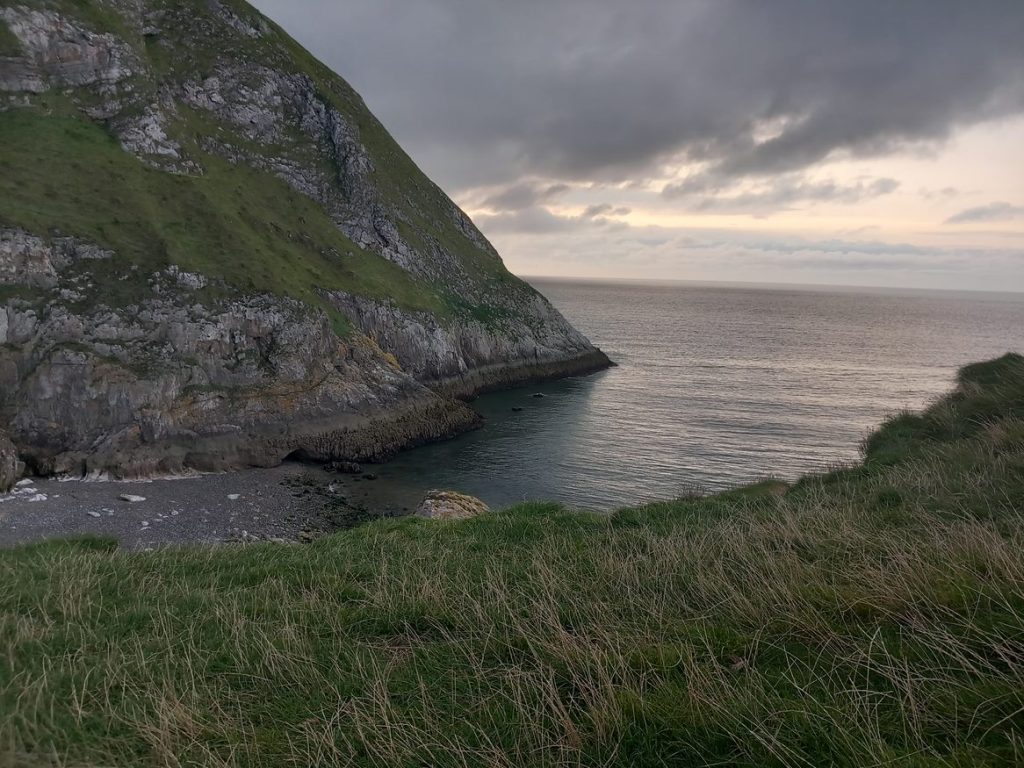
I can’t help thinking that I missed a trick when we were reading the Tempest by not concentrating more on the imagery of the sea. We’re in a seaside town after all, and there are some amazing sea views around here.
 Rich Baldwin
Leave a comment